Classic cocktail recipe
Martini
Cold gin, fresh vermouth, controlled water, and a garnish chosen before the glass leaves the freezer. The Martini is not hard because it is complicated; it is hard because every shortcut is visible.
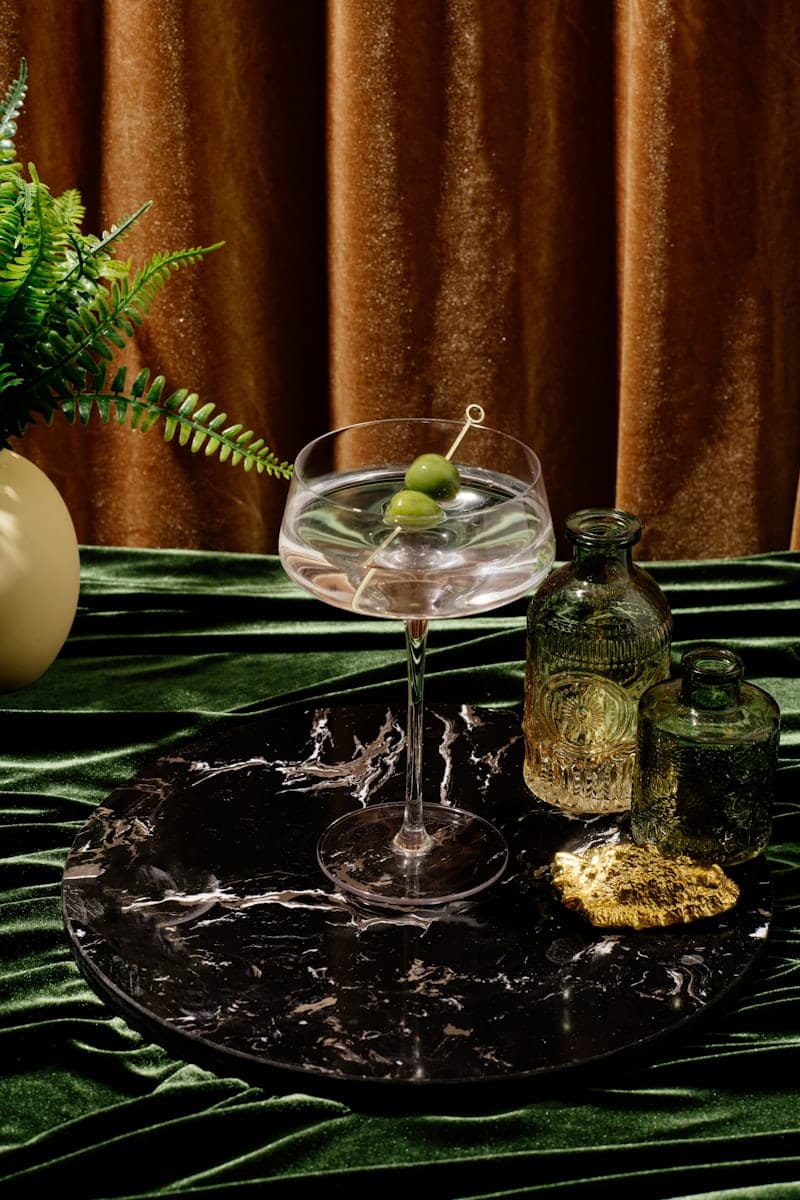
Recipe tools
The build
Chill the glass
Chill a cocktail glass or coupe before building the drink.
Measure gin, vermouth, and bitters
Add gin, dry vermouth, and orange bitters to a mixing glass.
Stir until very cold
Fill the mixing glass with hard cold ice and stir until the drink is very cold and lightly diluted.
30-40 sec
Strain cleanly
Strain into the chilled glass.
Choose the finish
Express a lemon twist over the surface and drop it in, or garnish with olives.
Serve the Martini as soon as it is strained. The drink has no finished ice to protect it, so the cold glass is part of the recipe.
Why this spec
A Martini looks simple because almost everything unnecessary has been removed. There is no citrus foam, no crushed ice, no syrup to hide behind, and no garnish that can rescue a careless build. The drink is clear, cold, and direct: gin, dry vermouth, a dash of bitters if the house spec wants that aromatic line, and enough dilution to turn high-proof ingredients into something poised. That restraint is why a martini recipe can feel intimidating. The classic martini is not difficult in the way a complicated tiki drink is difficult. It is difficult because every small choice is visible.
At the center of a gin martini is tension. Gin brings proof, botanical perfume, juniper, citrus peel, spice, root, flower, and heat. Vermouth brings wine, herbs, bitterness, and a softer savory edge. Ice brings temperature and water. The glass brings the promise that the drink will arrive bright and bracing, then warm gradually as it sits. A dry martini reduces the vermouth and pushes the gin forward. A wetter Martini gives vermouth more room and often feels rounder, quieter, and more food-friendly. Neither direction is automatically more serious. The right balance is the one that makes the drink taste complete.
The Martini does not have one settled origin story, and it is better to treat the history with care. Older cocktails with similar names, vermouth-and-gin formulas, hotel bar traditions, and changes in drinking taste all helped shape the drink that now carries the Martini name. The important point for the glass in front of you is that the Martini belongs to a lineage of spirit-forward, vermouth-tempered cocktails. It became iconic not because one person solved it forever, but because bartenders and drinkers kept refining a spare formula until it became a language of preference.
That language starts with the base spirit. A London dry gin gives the classic martini its clean architecture: firm juniper, dry citrus, clipped herbs, and a finish that stays crisp. Softer modern gins can make a beautiful Martini too, especially when they lean floral, cucumber-cool, or citrusy, but they may need a different vermouth ratio to avoid tasting thin. Navy-strength gin can be thrilling when handled with enough dilution. Old Tom gin points the drink toward a rounder, lightly sweet historical register. For a first house spec, London dry is the most useful place to begin because it makes the structure easy to read.
Vermouth is not a whisper of formality. It is an ingredient, and in a Martini it matters as much as the gin. Dry vermouth is fortified wine flavored with herbs and botanicals, which means it should be treated like wine once opened. Keep it refrigerated, use it while it still tastes alive, and replace it when it turns tired. Stale vermouth makes a Martini seem dull, dusty, or sour in the wrong way. Fresh vermouth can make the drink feel longer, cleaner, and more dimensional, even when the pour is modest.
Dryness is often misunderstood. A dry martini does not mean a drink with no flavor beyond cold gin. It means a Martini with less vermouth relative to gin. The mid-century fashion for extremely dry Martinis made vermouth nearly symbolic, but a very dry build is only satisfying when the gin is excellent, the stirring is exact, and the drink is served properly cold. A wetter Martini, sometimes closer to a 2:1 or 3:1 gin-to-vermouth ratio, can feel more integrated and less severe. The spec here sits in the dry classic lane without pretending vermouth is optional.
The bottle and the rest
Stirring is the technique that keeps the drink clear. A Martini is a stirred cocktail because the goal is cold, texture, and controlled dilution without aeration. Shaking chills quickly, but it also introduces air and can leave the drink cloudy and sharp-edged. Stirring with hard cold ice lets the bartender lower the temperature while adding water at a measured pace. That water is not a flaw. Dilution opens the botanicals, softens the alcohol, and makes the drink drinkable. An under-diluted Martini can taste hot and narrow. An over-diluted one loses its spine. The sweet spot is cold enough to feel crystalline and diluted enough to feel composed.
Glassware is part of that control. The drink should be strained into a chilled cocktail glass or coupe because there is no ice in the finished glass to keep it cold. A warm glass punishes the build immediately. A very large glass can make a modest pour look lost and warm too quickly. A smaller chilled coupe is often friendlier than an oversized V-shaped Martini glass because it preserves temperature and is easier to hold without spilling. The shape should support the drink rather than perform a caricature of it.
The garnish decides the final accent. A lemon twist gives a clean citrus oil snap across the surface, lifting the gin and making the first sip smell bright. Olives pull the drink savory, saline, and bar-room classic. Both are legitimate, but they create different Martinis. The choice should be made before the drink is served, not treated as decoration after the fact. Expressing a lemon twist over the glass should leave a fine sheen of oil, not a blast of pith. Olives should be firm, cold, and clean-tasting. A tired garnish can undo an otherwise careful build.
A dirty martini is related, but it is not just a classic Martini with a casual splash from the olive jar. Olive brine changes the balance, texture, salt, and aroma of the drink. It can be delicious when measured, especially for drinkers who want a more savory cocktail, but it needs its own proportion and its own expectations. Too much brine can flatten the gin and make vermouth disappear. A good dirty martini still needs cold, dilution, and restraint. The best versions taste intentionally saline, not murky.
A vodka martini follows the same visual grammar but speaks in a different register. Vodka removes most of the botanical conversation, so texture, temperature, vermouth, and garnish become even more important. A vodka martini can be elegant, especially when the drinker wants a cleaner, silkier profile, but it should not be confused with the gin-led classic martini. Gin gives the drink its traditional architecture. Vodka turns the Martini into a colder, quieter study of spirit texture and service.
Ordering or making a Martini is really a set of choices. Gin or vodka. Dry, wet, or somewhere between. Lemon twist, olives, or brine. Bitters or no bitters. Up in a chilled glass, always. Once those choices are clear, the drink becomes practical rather than mysterious. At home, begin with the listed spec before chasing personal extremes. Measure the gin and vermouth, use fresh ice, stir longer than a quick swirl, taste the drink if you are learning, and notice how the sharp edge becomes polished as the water and cold settle in.
Food gives the Martini context. Its cold, dry, savory character works beautifully with oysters, smoked fish, caviar service, anchovy toast, fried snacks, roast chicken skin, steakhouse starters, salted nuts, olives, and crisp potato chips. The drink is not sweet, so it does not fight rich or saline food. It cuts through fat, echoes salt, and resets the palate. In a bar, that makes the Martini one of the great first drinks of the evening: appetite-waking, precise, and social without being loud.
The Martini also carries a particular bar mood. It belongs to hotel lounges, steakhouse counters, quiet date-night corners, old restaurants with polished wood, and home kitchens where someone remembered to put the glasses in the freezer. The ritual is part of the pleasure: the mixing glass filling with ice, the bar spoon moving in a controlled circle, the clear stream through the strainer, the moment the garnish hits the surface. The drink does not need theatrical garnish or bright color. Its drama is the hush before the first sip.
For a reliable home Martini, keep the process strict and the attitude relaxed. Chill the glass. Use gin you like neat enough to trust. Keep vermouth cold and fresh. Measure the pour instead of guessing. Stir until the mixing glass feels properly cold. Strain cleanly. Garnish with intent. Once the classic martini recipe makes sense, adjust one variable at a time: a little more vermouth for roundness, a little less for a sharper dry martini, a lemon twist for lift, olives for savor, brine for a dirty martini, or vodka when clarity matters more than botanicals. The Martini endures because it gives those choices weight without needing excess. It is a cold, clear classic built on balance, restraint, and the confidence to stop at exactly enough.
Take it somewhere
Wetter
More vermouthMove toward 2:1 or 3:1 gin to vermouth when you want a rounder Martini that sits better with food.
Dryer
Sharper lineCut the vermouth to a quarter ounce only after making the house spec once; less vermouth leaves less room for error.
Olive service
Savory finishUse cold, firm olives as garnish without brine. A Dirty Martini is its own measured drink, not a splash from the jar.
Vodka
Quieter baseFollow the same stirred method when texture and temperature matter more than botanicals.
Where it goes wrong
Warm glass
A warm coupe steals the drink immediately. Chill the glass before you touch the mixing glass.
Dead vermouth
Open vermouth is wine. Keep it cold and replace it when it tastes tired, dusty, or flat.
Under-stirring
Cold alone is not enough. The water from stirring opens the gin and makes the drink feel composed instead of hot.
Questions, answered
Gin or vodka?
Gin is the canonical Bar Guru spec because botanicals give the Martini its architecture. Vodka can be elegant, but it is a different register.
Should a Martini be shaken?
Not for this spec. Stirring keeps the drink clear and controls dilution without adding air.
How dry should it be?
Start with the listed 5:1 structure. Go drier only when the gin, vermouth, and stirring already taste balanced.
Cold glass, quiet room
A Martini is an opening move: appetite-waking, exact, and better when the room is still deciding what kind of night it will become. Make it cold enough that the first sip feels almost architectural.