Classic cocktail recipe
Margarita
Five ingredients, zero theater. The Margarita is easy to throw out of balance - drowned in sour mix, oversweetened into a slushie, or buried under a heavy salt rim. The house spec is dry, bright, and exactly repeatable. This is the version you stop adjusting.
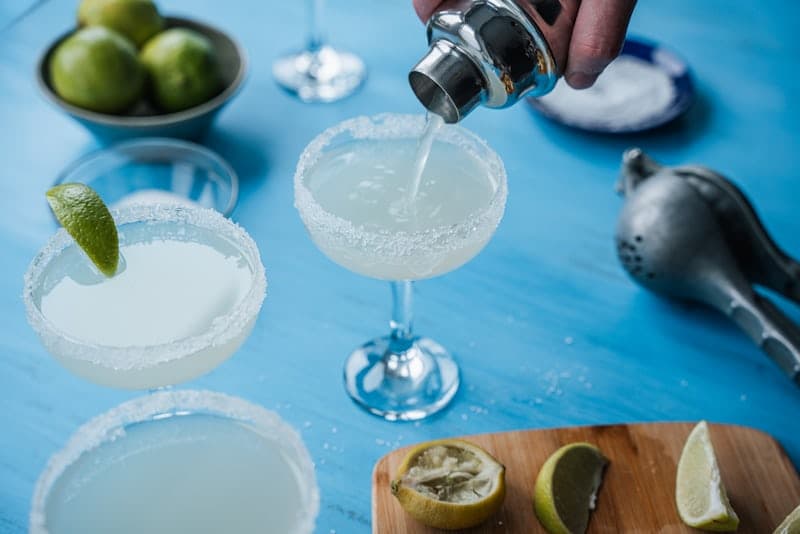
Recipe tools
The build
Salt half the rim
Run a lime wedge around one side of the glass - outside edge only, so salt does not end up inside the drink - and dip it in a shallow plate of kosher salt. Half, not all. You want the option, not the obligation.
Shake hard until the tin frosts
Tequila, lime, orange liqueur, and the agave if the limes demand it, into a shaker with five or six solid cubes. Harder than feels polite. Dilution is an ingredient: a hard shake adds about an ounce of water, and the drink is engineered to receive it. A timid shake leaves the spec hot and cramped.
12-15 sec
Double-strain over fresh ice
Fresh ice, not the shaking ice, which has done its job and given up. The fine strainer catches the pulp and shards that make the first sip feel cluttered. Garnish with a lime wheel. Done - no blender, no mix, no apologies.
Serve it immediately. A Margarita has roughly a ten-minute window before dilution turns from ingredient to intruder, which has never actually been a problem in recorded history.
Why this spec
Nobody owns the Margarita's origin story, which is part of its charm. The drink fits the older Daisy family of sours built on spirit, citrus, and a sweet modifier, while margarita is Spanish for daisy. That lineage is useful context without pretending it settles who first made the drink.
What matters more than the history is the ratio, because the ratio is the recipe. Margaritas die one of two deaths: too sweet or too watery. The 2 : 1 : ¾ build holds the line against both. Two ounces of blanco keeps the agave in charge. A full ounce of lime keeps it bright enough to want a second. Three-quarters of an ounce of orange liqueur is enough to round the edges without turning the drink into an orange-flavored apology.
You'll see other specs defended with religious intensity - the equal-parts 1 : 1 : 1, the sweeter 3 : 2 : 2, the liqueur-free Tommy's. They're not wrong; they're different drinks wearing the same name. This one is the driest of the mainstream builds, which is deliberate. A dry Margarita rewards good tequila and fresh limes. A sweet one hides them, and if you're hiding your tequila, the problem is the tequila.
The optional quarter-ounce of agave syrup is the only adjustment worth debating. Sharp winter limes earn it. Good summer limes don't.
The bottle and the rest
The tequila. Use a 100% agave blanco with enough clean, peppery character to stay present after lime and orange liqueur arrive. Reposado works as a rounder variation, but the house spec stays with blanco so barrel notes do not crowd the citrus. Check the tequila guide for its current publication state before choosing a bottle.
The orange liqueur. Use a dry orange liqueur with enough structure to round the lime without making the drink syrupy. A sweeter bottling may need a slightly smaller pour, while a brandy-based orange liqueur adds weight and moves the drink toward the Cadillac variation. Make the listed spec once before adjusting the modifier.
The lime. Fresh, squeezed the same day. Bottled lime juice oxidizes into something bitter and flat - it's the single most common reason a homemade Margarita tastes "off" in a way nobody can name. One average lime yields about an ounce, so a round for four is a four-lime commitment. Roll them hard on the counter first; warm limes give more.
The salt. Kosher, not iodized table salt, which turns metallic against citrus. Half the rim only - salt should be an option per sip, not a sentence.
The agave. A quarter-ounce, only when the limes bite back. Taste a drop of the juice first; let the fruit make the call.
Take it somewhere
Spicy
Chile heatThree or four jalapeño coins into the shaker before the ice - seeds in if you mean it, seeds out if you're hedging. Double-strain with intent; stray seeds are a foul. The heat should arrive late and leave politely.
Tommy's
Agave onlyDrop the orange liqueur entirely and double the agave to a half-ounce. This modern agave-sweetened variation puts more focus on the tequila, so use a blanco that stays clear and expressive through lime.
Mezcal
Smoke splitSplit the base - one ounce blanco, one ounce mezcal - before going full smoke. A 100% mezcal Margarita is a campfire; the split is a fireplace. Everything else stays put.
Frozen
Blended iceBlender, a full half-ounce of agave, about a cup of ice per drink. Frozen drinks read less sweet because deep cold softens the palate, so the extra syrup keeps the listed balance intact.
Where it goes wrong
Bottled lime juice
It oxidizes into something bitter and flat within hours of bottling, and no amount of good tequila claws that back. Fresh lime is the most important ingredient correction in the entire drink. If you remember one thing from this page, make it this one.
Sweet-and-sour mix
Margarita mix is the reason a generation thinks they don't like Margaritas. It's corn syrup doing a citrus impression. The real spec takes ninety seconds longer than opening a bottle, and the difference is the entire drink.
Too much orange liqueur
It sweetens and it muddies, and over-pouring can feel generous even when it pulls the drink out of balance. Three-quarters of an ounce is a ceiling, not a floor - the liqueur's job is rounding the lime's edges, not co-starring.
The timid shake
A gentle shake under-dilutes and under-chills, leaving the drink hot, cramped, and boozy in the bad way. Shake until the tin genuinely hurts to hold - twelve to fifteen seconds. The drink is built assuming that water arrives.
Questions, answered
What kind of orange liqueur works?
Use a dry orange liqueur with enough structure to support the tequila and lime without making the finish syrupy. If the liqueur tastes sweeter or heavier, make the listed spec once before reducing the pour slightly.
What tequila works in a Margarita?
Use a 100% agave blanco with clean, peppery character that remains present after lime and orange liqueur. Reposado is a rounder variation, while blanco remains the backed house default. Check The tequila guide for its current publication state before choosing a bottle.
Rocks or coupe?
Rocks if you're sitting on it - the ice holds the temperature through a conversation. Coupe if it will be gone in ten minutes, which, fair. Both are correct; the frozen-mug-with-a-handle is the only wrong answer, and even that is negotiable poolside.
Can I batch it for a party?
Yes - multiply the spec, not the method. For eight: 16 oz blanco, 8 oz fresh lime, 6 oz orange liqueur in a pitcher, plus 4 oz of water to stand in for shaking dilution. Refrigerate up to four hours, stir over ice to serve, salt the rims to order. Don't add ice to the pitcher; it dilutes on a curve you cannot control.
Why does my Margarita taste bitter?
Almost always one of three culprits: bottled lime juice, too much rind contact while juicing, or iodized table salt bleeding into the drink from a fully salted rim. Fresh limes, light pressure, kosher salt.
The glass and the moment
A Margarita is a first-hour drink - the one that opens the night, sharpens the appetite, and makes the second round a foregone conclusion. It wants warm evening, salt-rimmed and up at the start of dinner, or over rocks next to anything from a grill. It does not want to be the fourth drink of the night. Few things do, but the Margarita is honest enough to say so.