Classic cocktail recipe
Sidecar
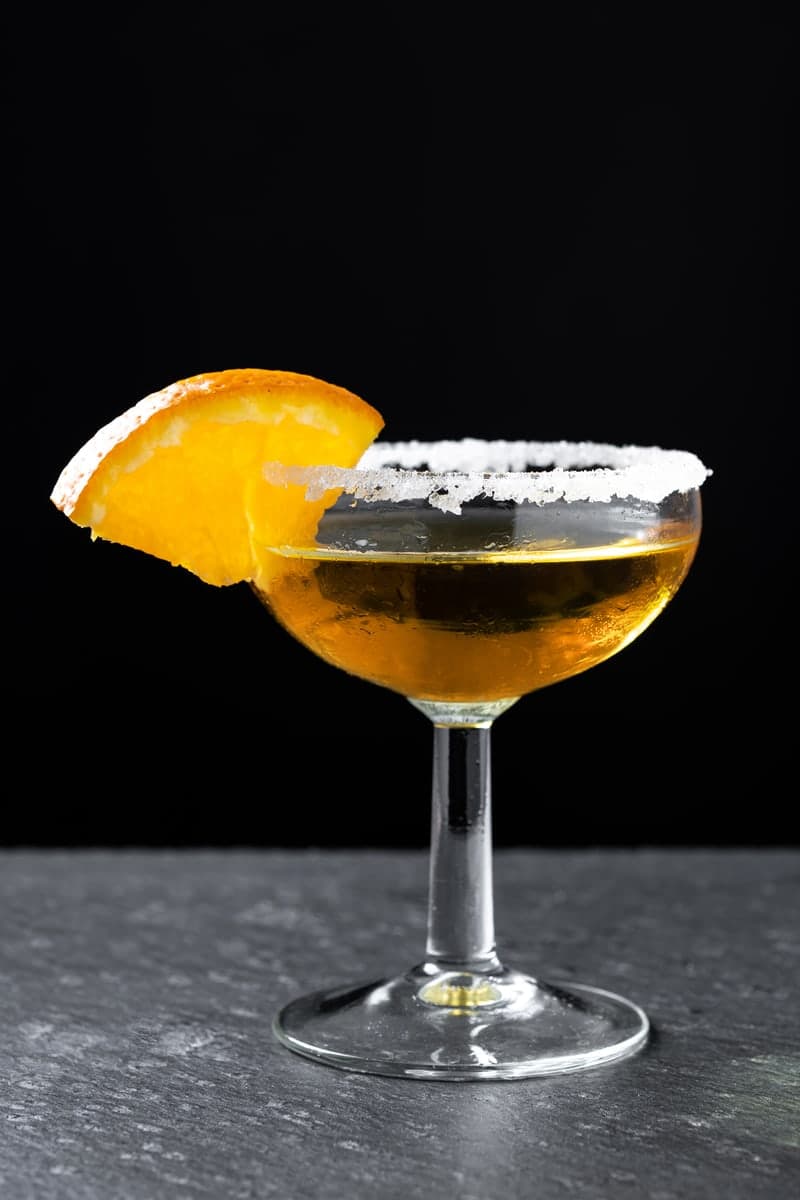
Cognac or good brandy, orange liqueur, and fresh lemon make the Sidecar elegant only when the drink stays dry, cold, and exact. The half sugar rim is optional; balance is not.
Recipe tools
The build
Chill and half-rim the coupe
Chill a coupe and, if using sugar, moisten only half the outside rim with lemon and dip that half lightly in sugar.
Measure the three liquids
Add Cognac or good brandy, orange liqueur, and fresh lemon juice to a shaker.
Shake with hard cold ice
Fill the shaker with hard cold ice and shake until the drink is very cold and lightly aerated.
10-12 sec
Double strain cleanly
Double strain into the chilled coupe, keeping loose sugar out of the glass.
Express the orange twist
Express an orange twist over the drink, garnish, and serve immediately.
If the drink tastes sharp, check the lemon freshness and orange liqueur before reaching for extra sugar.
Why this spec
The Sidecar is a brandy sour where Cognac or good brandy, orange liqueur, and fresh lemon have to land in one clean line. The drink should feel polished, cold, and bright, with enough grape warmth from the base to keep it from tasting like a generic citrus cocktail. The Bar Guru house spec keeps the drink dry because the orange liqueur already brings sweetness.
Cognac is the default language of the classic Sidecar, but the broader category is brandy. That distinction matters for Bar Guru routing: this recipe belongs in the brandy cocktail family, while the site does not currently publish a separate brandy spirit shelf. The copy can talk about Cognac and brandy context without pretending there is a ranked brandy bottle guide behind the page.
The 2 : 0.75 : 0.75 ratio gives the base spirit the lead. Two ounces of Cognac or good brandy provide body, aroma, and a little roundness. Three-quarters of an ounce of orange liqueur sweetens and adds citrus oil. Three-quarters of an ounce of fresh lemon juice sharpens the glass without turning it thin. If the liqueur is syrupy or the lemon is tired, the balance shows immediately.
Fresh lemon is non-negotiable here because the Sidecar has no bitters, soda, or aromatic mixer to hide stale citrus. Lemon should cut through the base and liqueur, then get out of the way. Bottled lemon tends to taste flat and harsh at the same time, which makes the drink feel sour but not fresh.
Orange liqueur does more than add orange flavor. It is the sweetener, the bridge between lemon and brandy, and the reason this spec does not need simple syrup. A clean, dry-leaning orange liqueur keeps the finish elegant. A heavy one can make the cocktail taste sticky before the base spirit has a chance to register.
The bottle and the rest
The sugar rim is optional because it changes the way the drink drinks. A full rim makes every sip sweeter, whether the cocktail needs it or not. A half rim is more useful: one side stays dry, one side offers a little lift, and the drinker can choose. Keep the sugar outside the glass so it frames the sip instead of dissolving into the spec.
The ice cue is simple but important. Shake the drink with hard cold ice until the tin is cold and the texture has tightened, then strain into a chilled coupe with no finished ice. The Sidecar needs the chill and dilution from shaking, but it should not sit on rocks after service. Too much extra water turns the citrus and liqueur soft.
Double straining helps because lemon pulp, ice shards, and loose sugar can make a polished drink feel clumsy. The Sidecar is not a frothy sour and it is not a crushed-ice drink. It should arrive smooth, cold, and direct, with the orange twist giving aroma before the first sip.
Cognac brings a familiar polished profile, but good brandy can work when it has enough body to remain present after lemon and liqueur. The base should still taste clearly like brandy once shaken. If it disappears, the cocktail becomes orange-lemon rather than Sidecar.
The most useful variation is restraint. Skip the sugar rim for a drier read, use the half rim when the lemon is assertive, or try Armagnac when you want a more rustic texture. Those changes keep the same structure. Adding extra syrup, more liqueur, or a full crust of sugar moves the drink away from the clean brandy sour this route is meant to teach.
The Sidecar sits near other citrus sours even though its base is different. A Daiquiri shows rum, lime, and sugar in the same stripped-down logic. A Margarita shows how orange liqueur can work with agave and citrus. The Sidecar belongs beside them as the brandy branch: richer, quieter, and less forgiving of lazy sweetness.
When the drink tastes wrong, check the practical points first. Was the coupe cold? Was the lemon fresh? Was the orange liqueur measured, not guessed? Did the sugar stay outside the glass? Did the shake make the drink cold enough? The Sidecar has only three liquid ingredients, so the fix is usually in measuring, citrus, or temperature.
A good Sidecar feels elegant without becoming delicate. It is a small, strong, shaken cocktail with a dry center, a bright edge, and an aromatic finish. Keep the base spirit visible, keep the lemon fresh, keep the sugar optional, and the drink explains the brandy cocktail family without needing a separate spirit shelf to prop it up.
Take it somewhere
No sugar rim
DryerSkip the rim when the orange liqueur already rounds the lemon and the drink should stay fully dry.
Half rim
ControlSugar only half the glass so each sip can be dry or lightly sweetened without changing the whole spec.
Armagnac
Rustic baseUse Armagnac when you want the drink earthier and more textured while keeping the same sour structure.
Orange-forward
AromaExpress the orange twist generously for a brighter top, but do not add orange juice to the house recipe.
Where it goes wrong
Full sugar crust
A heavy rim makes every sip sweeter than the recipe intends and can push loose sugar into the drink.
Syrupy liqueur
Orange liqueur is the sweetener here; if it is heavy, the Sidecar tastes sticky before Cognac can speak.
Warm service
A Sidecar served in a warm coupe loses the clean edge that makes the dry spec work.
Loose sugar in the glass
Sugar belongs outside the rim. Once it falls into the drink, the measured balance changes as the cocktail sits.
Questions, answered
Does a Sidecar need a sugar rim?
No. A half rim is optional and gives control without changing every sip.
Can I use brandy instead of Cognac?
Yes, if the brandy has enough body to stay present after lemon and orange liqueur. Cognac remains the house default for the classic read.
Why no simple syrup?
Orange liqueur already brings sweetness. Extra syrup can make the drink heavy.
Is there a Bar Guru brandy spirit shelf?
No. This recipe links to the backed brandy cocktail-family route and does not depend on a separate brandy spirit shelf.
Dry elegance
The Sidecar is best when it resists dessert. Keep the Cognac or brandy present, the lemon clean, and the rim optional, then move through the brandy cocktail guide, the Daiquiri, or the Margarita to compare how citrus sours change by base spirit.