Classic cocktail recipe
Old Fashioned
Whiskey, sugar, bitters, water, and orange oil. The Old Fashioned is less a trick than a discipline: make the base spirit taste calmer, colder, and more complete.
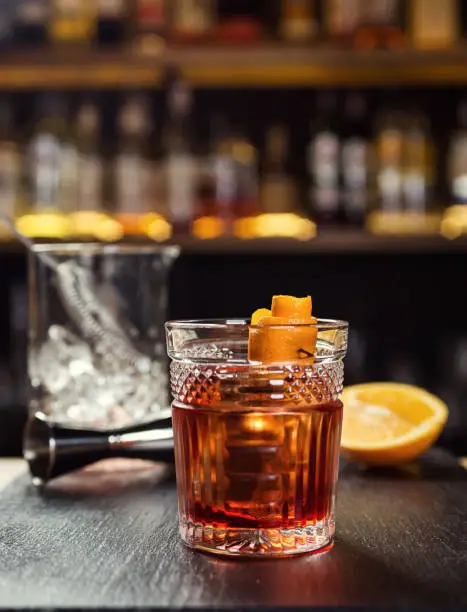
Recipe tools
The build
Add the base to the glass
Add bourbon, rich demerara syrup, Angostura bitters, and orange bitters to a rocks glass.
Add cold serving ice
Add one large clear cube or several large cold cubes.
Stir until glossy
Stir in the glass until the syrup is integrated and the drink is cold, glossy, and lightly diluted.
20-30 sec
Express the peel
Express an orange peel over the surface of the drink.
Serve on the ice
Set the orange peel in the glass and serve on the ice.
Taste the drink as the cube opens it. If the first minute is hot and the fifth minute is right, stir a little longer next round.
Why this spec
An Old Fashioned is a whiskey cocktail that asks for very little and gives away every shortcut. There is no citrus juice to brighten a flat pour, no soda to stretch the edges, and no shaker to make the drink look busier than it is. A proper old fashioned recipe is built from whiskey, sugar, bitters, water, cold glass, good ice, and a strip of citrus oil. That spare structure is the point. The classic old fashioned is not a sweet brown drink with fruit buried in the bottom. It is whiskey shaped by a small amount of sweetness, sharpened by bitters, and softened by dilution until it feels deliberate.
The drink belongs to the oldest grammar of the cocktail: spirit, sugar, bitters, and water. That does not mean its story has one tidy beginning or one inventor waiting at the end of a citation. Older cocktail formulas, changing bar fashion, the rise of named drinks, and the return to plainer service all helped create what drinkers eventually called an Old Fashioned. Treating it as a single solved origin story misses the charm. The name feels like a request as much as a title: make the drink in the older style, with whiskey at the center and nothing unnecessary crowding the glass.
The old fashioned ingredients are simple, but each one matters. Whiskey gives the drink its body and voice. Sugar rounds the heat and gives the texture a faint gloss. Angostura bitters add spice, bitterness, clove, cinnamon, and a dry aromatic snap that keeps the drink from tasting merely sweet. Water comes from ice and stirring, not from carelessness. The garnish adds aroma more than flavor. When those parts are measured and handled well, the finished drink tastes complete without seeming complicated.
Bourbon makes a generous and familiar version. A bourbon old fashioned leans into vanilla, caramel, oak, corn sweetness, and a rounded finish that welcomes demerara syrup. It is a good home base because the sugar in the build supports flavors bourbon already has. That does not mean the drink should become candied. The syrup should be an accent, not a glaze. If the first sip tastes like sweetened whiskey instead of whiskey made smoother and more aromatic, the balance has gone too far.
A rye old fashioned speaks in a drier register. Rye brings pepper, grain, baking spice, and a leaner edge that can make the same formula feel more bracing. Some drinkers prefer rye because the sugar has more resistance to work against, and the bitters seem to stand taller. Others want the richer comfort of bourbon. Neither version is the official answer for every glass. The choice depends on mood, food, weather, and the bottle in front of you. The useful rule is to pick a whiskey with enough character to remain interesting after ice and sugar join the conversation.
Sugar is the most visible place where style changes the build. The old ritual uses a sugar cube dampened with bitters and a small splash of water, then muddled until it dissolves enough to join the whiskey. That method has texture and ceremony, but it can leave grit if rushed. Rich demerara syrup is cleaner for a house spec because it dissolves immediately and brings a dark, molasses-like depth without requiring extra muddling. Simple syrup works too, though it is often lighter. Whatever form you choose, measure it. Guessing with sugar is the fastest way to make the drink heavy.
Bitters give the Old Fashioned its backbone. Angostura bitters are the classic workhorse because they bring spice, dryness, and structure in just a few dashes. Orange bitters are optional, but they can make sense when the garnish is orange peel and the whiskey has enough oak to carry a brighter top note. The goal is not to perfume the drink into a spice cabinet. Two dashes of Angostura bitters and, if desired, one dash of orange bitters are enough to make the glass feel aromatic without pulling attention away from the whiskey.
The bottle and the rest
Technique is part of the drink’s personality. An Old Fashioned is a built cocktail, usually made in the same rocks glass that will go to the guest. Add the whiskey, syrup or prepared sugar, and bitters, then add ice and stir in the glass until the drink turns cold, glossy, and integrated. It is also related to the stirred cocktail family because the same principle applies: use ice and motion to add controlled water while keeping the drink clear. Shaking is the wrong instinct. It clouds the drink, chips the ice, and makes a spirit-forward classic feel thin and bruised.
Dilution is not a flaw in an Old Fashioned. It is the ingredient that makes the other ingredients behave. Without enough water, the drink tastes hot, narrow, and overly sweet at the same time because the syrup has not spread through the whiskey. With too much water, the drink loses its shoulders and starts to taste tired before the glass is half finished. A large cube slows the process and gives the drink a calm arc: strong and aromatic at first, then rounder as the ice opens it. Several large cold cubes can work as well. Small wet ice makes the drink race ahead.
The glass matters because the Old Fashioned is served on ice and meant to be held. A heavy rocks glass gives the build enough room for stirring, a large cube, and the orange peel without making the pour look lost. The drink should feel compact and grounded, not stranded in an oversized vessel. Chill is useful, but the ritual does not require a frozen coupe or theatrical smoke. The pleasure is tactile: the weight of the glass, the slow movement of ice, the amber line of whiskey against the side, and the aroma arriving before the first sip.
Garnish should be restrained and fresh. An orange twist is the most common finish because the oil sits beautifully over bourbon, rye, sugar, and Angostura bitters. Express the peel over the surface, rub it lightly on the rim if you like, and set it in the glass. A lemon twist can be excellent with rye or a drier build, giving the drink a sharper lift. The cherry is a choice, not an obligation. A good cocktail cherry can add a quiet dessert note near the end; a neon-red candy cherry can drag the drink toward the wrong era. Muddled orange slices and cherries are best treated as a separate style, not the default classic.
Common mistakes usually come from trying to help the drink too much. Too much syrup makes it sticky. Too many bitters make it medicinal. Too little stirring leaves the whiskey hot and the sugar disconnected. Shaking makes it cloudy. Crushed ice floods it. Weak whiskey disappears. A pile of fruit turns it into a muddled fruit drink with whiskey attached. The Old Fashioned rewards restraint because every part has a job. Build it cleanly once, then adjust one variable at a time.
In a bar, the Old Fashioned is a useful test of care. It does not require rare bottles or elaborate equipment, but it does reveal whether the room respects proportion, ice, and service. It works before dinner, beside a steak, with roast chicken, charred mushrooms, salted nuts, burgers, barbecue, aged cheese, and dark chocolate. The cocktail can feel elegant in a hotel lounge and completely natural at a neighborhood counter. Its range comes from structure rather than novelty. Whiskey, sugar, bitters, water, and citrus oil can sit comfortably in many rooms.
At home, the best approach is to make the listed spec before improvising. Use a whiskey you enjoy but do not need to hide. Measure the syrup. Dash the bitters with confidence, then stop. Add one large cold cube, stir until the drink looks unified, and express a fresh orange peel over the top. Taste what the water does over the next few minutes. If the drink becomes better as it rests, you are close. If it collapses quickly, use colder ice or stir less. If it stays sharp and hot, stir longer or check the whiskey proof.
The Old Fashioned endures because it is both a recipe and a philosophy of restraint. It lets bourbon feel round, rye feel sharp, Angostura bitters feel structural, and sugar do quiet work in the background. It can be made with a cube and a bar spoon, or with nothing more than a sturdy glass and patience. The drink does not need a performance to feel classic. It needs good whiskey, measured sweetness, aromatic bitters, honest dilution, cold service, and the clean snap of orange oil over the top. Built that way, it remains one of the clearest arguments for stopping at exactly enough.
Take it somewhere
Rye
Drier spiceUse rye for a leaner, peppery Old Fashioned that gives the sugar more resistance.
Simple syrup
Cleaner sweetUse simple syrup when you want a lighter texture than demerara, then keep the pour measured.
Lemon twist
Sharper oilA lemon peel can work with rye or a drier build when orange starts to feel too plush.
Cherry finish
Quiet dessertA good cocktail cherry is optional. Muddled fruit is a separate style, not this house spec.
Where it goes wrong
Too much syrup
Sugar should polish the whiskey, not turn it sticky. A quarter ounce is already doing real work.
Crushed or wet ice
Small warm ice floods the drink before it has a chance to settle. Use a large cold cube or several firm cubes.
Skipping the stir
Building over ice is not enough. Stir until the syrup disappears and the drink looks unified.
Questions, answered
Bourbon or rye?
This spec is bourbon-led for roundness. Rye works when you want more spice and a drier line.
Do I need a sugar cube?
No. Rich demerara syrup is cleaner and more repeatable at home, especially when you are not muddling.
Should I add fruit?
Not in this house spec. Expressed orange peel gives aroma without turning the drink into a fruit build.
The slow arc
A good Old Fashioned changes in the glass. It starts firm, opens around the cube, and stays readable because nothing extra was invited in.