Classic cocktail recipe
Manhattan
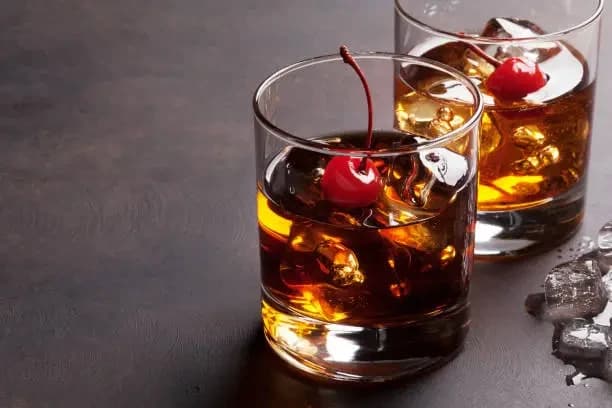
Rye, sweet vermouth, and bitters become a Manhattan when the dilution is calm and the cherry knows its place. Dark, clean, and still one of the best first orders in the room.
Recipe tools
The build
Combine the three parts
Chill a coupe, then add rye whiskey, sweet vermouth, and Angostura bitters to a mixing glass.
Stir until cold and silky
Fill the mixing glass with hard cold ice and stir until the drink is very cold, clear, and lightly diluted.
30 sec
Strain into the coupe
Strain into the chilled coupe and garnish with a brandied cherry, leaving extra cherry syrup out of the drink.
Serve up and cold. The Manhattan warms quickly, but it should not arrive warm.
Why this spec
A Manhattan is a small drink with very little room for disguise. Rye whiskey, sweet vermouth, bitters, ice, and a cherry are enough to make it feel complete, but only when the parts are measured and handled with care. The drink should arrive dark, clear, cold, and composed, with whiskey still leading after the vermouth rounds the edges.
The Bar Guru house spec starts with rye because the drink benefits from spice and structure. Rye gives the Manhattan a dry line through the middle, so the sweet vermouth can add body without making the glass heavy. Bourbon can make a good variation, but this default build keeps rye as the base because it gives the cocktail more grip.
The 2:1 whiskey-to-vermouth shape is direct and easy to remember. Two ounces of rye give the drink its frame. One ounce of sweet vermouth brings wine, herbs, bitterness, and sweetness. Two dashes of Angostura bitters tighten the center so the finish does not taste like whiskey and fortified wine simply poured together.
Sweet vermouth matters more here than many home bars admit. It is wine-based, so it should be fresh, refrigerated after opening, and replaced when it tastes tired or flat. Stale vermouth makes a Manhattan taste dusty before the rye has a chance to speak. Fresh vermouth makes the same ratio feel polished and alive.
Bitters are the quiet control. Angostura bitters add spice, dryness, and a small bitter edge that keeps the drink from sliding sweet. More bitters can be useful in some house styles, but the listed spec starts restrained. The bitters should frame the rye and vermouth, not turn the drink medicinal.
The bottle and the rest
The Manhattan is stirred because the goal is clarity and controlled dilution. Shaking would add air, cloud the drink, and chip ice into a texture that belongs somewhere else. Stirring uses cold ice and steady motion to add water gradually, smoothing the rye and opening the vermouth without making the drink look or taste bruised.
Dilution is not optional. A Manhattan that is barely stirred can taste hot, sharp, and strangely sweet at the same time because the ingredients have not settled into one drink. Stir until the mixing glass is cold and the texture looks silky. The finished cocktail should feel strong, but it should not feel raw.
The glass is part of the service. Chill a coupe before building, then strain cleanly so the drink lands cold and clear. The house spec is served up with no finished ice, which means the first few minutes matter. A warm glass makes the Manhattan sag before the cherry even reaches the bottom.
A brandied cherry is enough garnish. It gives a dark fruit note near the end of the drink and makes the glass feel finished without turning the spec into dessert. Do not dump cherry syrup into the mixing glass unless you are deliberately making a sweeter variation. The vermouth is already doing the rounding.
A bourbon Manhattan moves the drink into a softer lane. Bourbon brings more roundness, vanilla, corn sweetness, and oak, which can be very good when the drink wants comfort instead of bite. Keep the same measured vermouth and bitters, and treat bourbon as a variation rather than the default for this rye-led spec.
Food and timing favor the Manhattan when the night wants something spirit-forward but not bare whiskey. It sits well before dinner, beside salty snacks, steak, roast mushrooms, aged cheese, or a slower second round. The drink has enough sweetness to feel generous and enough bitterness and rye spice to keep the appetite awake.
When a Manhattan tastes wrong, check the practical details before rewriting the recipe. Was the vermouth fresh? Was the glass cold? Did the drink get enough stirring? Did cherry syrup sneak into the build? Was the rye strong enough to stay visible? The recipe is simple enough that the answer usually shows up in the first sip.
The Manhattan endures because it feels formal without needing performance. It is measured, stirred, strained, and garnished; nothing extra has to happen. When rye, vermouth, bitters, cold glass, and controlled water are in balance, the cocktail tastes dark, clean, and calm, with every part doing exactly enough.
Take it somewhere
Perfect Manhattan
Split vermouthSplit the vermouth between sweet and dry for a lighter, more herbal profile.
Bourbon
Rounder baseBourbon makes the drink softer and sweeter. Keep the vermouth measured so it does not become heavy.
Orange bitters
Brighter topAdd a dash of orange bitters when the rye can handle a little citrus oil in the aroma.
On a cube
Slower sipServe over a large cube when you want a longer, more relaxed whiskey drink.
Where it goes wrong
Bad vermouth
The Manhattan depends on vermouth more than people admit. If it tastes stale, the drink tastes stale.
Too much cherry syrup
A cherry is a garnish, not the sweetener. Let vermouth do the rounding.
Shaking
Shaking clouds and thins a drink that wants to be clear, cold, and deliberate.
Questions, answered
Rye or bourbon?
Rye is the Bar Guru spec because it keeps the drink dry and structured. Bourbon works for a rounder variation.
Should it be served up?
Yes for the house spec. A large cube is a valid slower service, but the classic coupe keeps the drink precise.
What vermouth should I use?
Use a fresh sweet vermouth you would taste on its own. Refrigerate it after opening.
Dark, clear, first round
A Manhattan likes polished wood, low light, and salty food nearby. It should feel composed from the first sip, with rye still leading after the vermouth settles in.