Classic cocktail recipe
Negroni
Equal parts gin, Campari, and sweet vermouth only work when the drink is cold enough and the vermouth is alive. The Negroni is bitter, herbal, compact, and completely unforgiving.
Recipe tools
The build
Measure the equal parts
Add gin, Campari, and sweet vermouth to a mixing glass.
Stir until properly cold
Fill the mixing glass with solid ice and stir until very cold and lightly diluted.
25-35 sec
Strain over one large cube
Strain into a chilled rocks glass over one large cube.
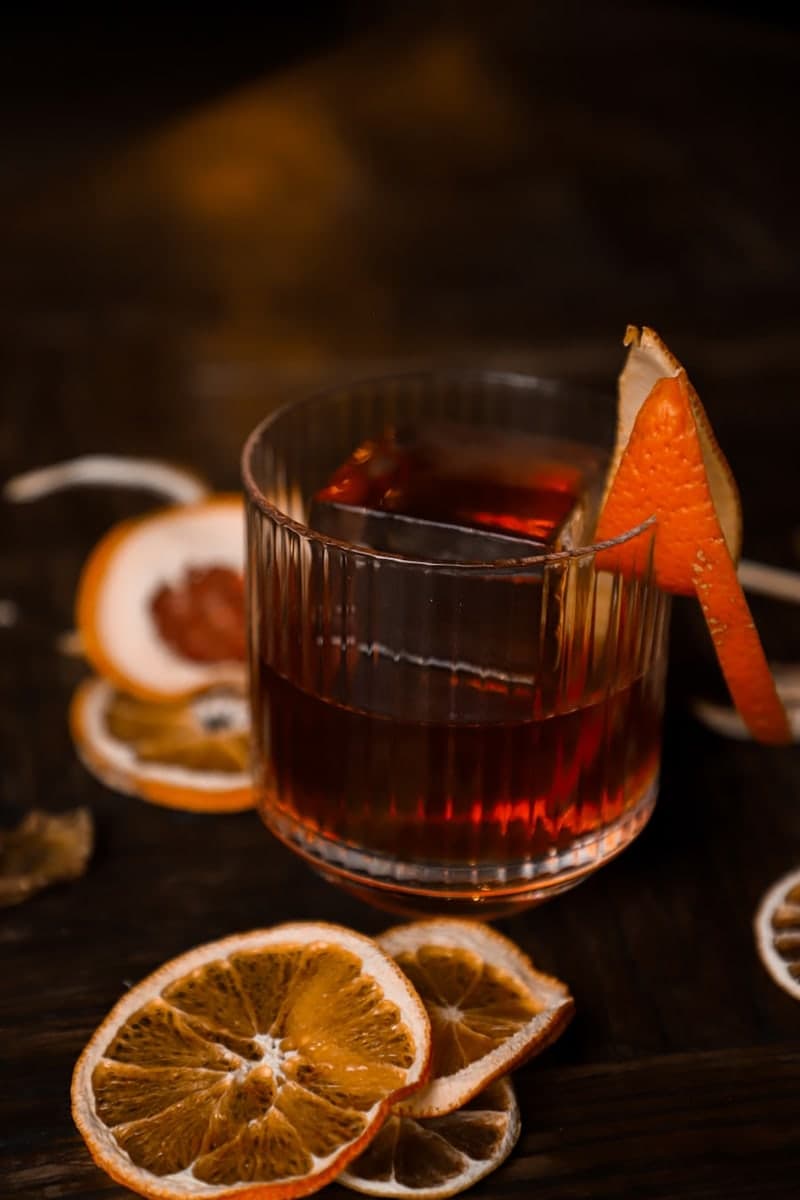
Express the orange peel
Express an orange peel over the drink, wipe the peel around the rim, and garnish.
If the drink tastes sticky, check the vermouth freshness and stir longer before changing the ratio. The equal-parts build should be the baseline, not the negotiation.
Why this spec
The Negroni is an equal-parts argument that happens to be easy to remember. Gin supplies proof and botanicals, Campari brings bitterness and red-orange bite, and sweet vermouth gives wine, herbs, and enough roundness to keep the drink from becoming a dare. The ratio is not a shortcut. It is the structure.
One ounce of each ingredient makes the drink compact enough to finish before the cube gives up, but not so small that it feels precious. The equal measure also keeps the cocktail honest: weak gin disappears, tired vermouth drags, and a short stir leaves the whole thing syrupy. There is nowhere for a bad bottle or lazy technique to hide.
Cold is what turns those strong edges into one drink. A warm Negroni tastes loud, sweet, and medicinal; a properly stirred one tastes bitter, herbal, and clean. The spec stays classic because the balance is already doing the work. Your job is mostly to measure accurately and give the drink enough time with ice.
This is why the Negroni is such a useful aperitivo spec. It is not trying to be refreshing in the highball sense or comforting in the dessert sense. It is built to wake up the palate before food, with bitterness doing the focusing and vermouth doing the rounding.
The bottle and the rest
The gin. London dry is the safe house lane because juniper and citrus can stand up to Campari. A softer modern gin can work, but it needs real botanical structure. If the gin tastes polite on its own, the Negroni will make it vanish. Use the gin spirit guide before choosing a bottle for the base.
The Campari. The house spec assumes Campari, not a generic red bitter. Other aperitivo bitters can be excellent, but they change sweetness, bitterness, and proof enough to become variations. Make the baseline first so the swap has a reference point.
The vermouth. Sweet vermouth is wine-based. Refrigerate it after opening, cap it tightly, and replace it when it tastes flat, oxidized, or dusty. Old vermouth is the fastest way to make a Negroni taste heavy before the gin gets a vote.
The ice. Stir with solid cubes until the mixing glass feels properly cold, then serve over one large cube. The first ice chills and dilutes; the second ice controls the pace of the drink. Small wet cubes make the final third thin.
The orange peel. Express the peel over the surface and wipe it around the rim. The oil brightens the first sip without adding juice, sugar, or extra volume. It is part of the spec, not a flourish.
Take it somewhere
Boulevardier
Whiskey swapSwap gin for bourbon or rye and the drink becomes deeper, warmer, and still bitter enough to stay in the family.
Martini lane
Gin benchmarkWhen the gin is the part you want to study, move to a Martini and let vermouth support instead of share equal billing.
Up
Colder first sipServe in a chilled coupe when you want the first ten minutes to feel tighter and more aperitif-like.
Soda length
Lower proofBuild the equal parts shorter, then top with chilled soda for a lighter bitter highball.
Where it goes wrong
Warm vermouth
Vermouth is wine. If it has been open on a shelf for weeks, the drink starts tired and no amount of orange peel fixes it.
Soft gin
A gin without botanical backbone lets Campari dominate every sip. The base does not need to shout, but it does need shoulders.
Under-stirring
The Negroni needs water as much as cold. A quick swirl leaves it syrupy, hot, and more bitter than balanced.
Questions, answered
Is the Negroni always equal parts?
The classic spec is equal parts. Adjusting gin upward can work, but make the baseline once before changing it.
Rocks or up?
Both work. Rocks service keeps the drink relaxed; up service makes the first part colder and tighter, but it warms faster.
Can I batch it?
Yes. Batch equal parts and chill, then stir with ice for each serving or test measured dilution before serving from the freezer.
Bitter before dinner
A Negroni belongs early: before food, beside olives or salty snacks, while the room still has a little edge. Its confidence comes from restraint, not volume. The best version tastes like all three bottles agreed to behave.
For the whiskey branch of the same bitter family, move to the Boulevardier. For the wider category, keep the path open through aperitivo cocktails.