Bittersweet cocktail recipe
Boulevardier
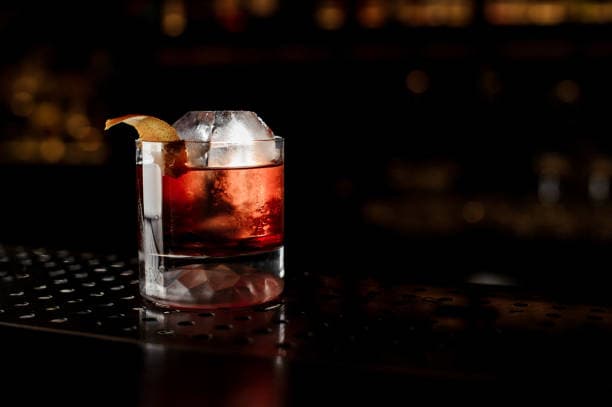
The Boulevardier is the bourbon branch of the bitter aperitivo family: whiskey, Campari, and sweet vermouth stirred cold, strained over a large cube, and finished with orange oil.
Recipe tools
The build
Chill the rocks glass
Chill a rocks glass if there is time.
Measure the equal parts
Add bourbon, Campari, and sweet vermouth to a mixing glass.
Stir until properly diluted
Fill the mixing glass with hard cold ice and stir until the drink is very cold, clear, and properly diluted.
25-30 sec
Strain over one large cube
Strain into the rocks glass over one large cube.
Express the orange peel
Express an orange peel over the drink, wipe the peel around the rim, and set it in the glass.
If the drink tastes sweet and flat, check vermouth freshness and stir time before changing the equal-parts spec.
Why this spec
A Boulevardier takes the equal-parts bitter structure drinkers know from the Negroni and gives it whiskey shoulders. The Bar Guru house spec uses bourbon as the primary base, then adds Campari and sweet vermouth in equal measure. The result should be deeper and warmer than a gin-led aperitivo, but it should still finish bitter, cold, and clean.
Bourbon is the default here because its round grain sweetness, oak, and vanilla-like warmth can meet Campari without turning the drink thin. The whiskey should remain visible after vermouth and bitter aperitivo join the glass. If the first sip tastes mostly red and sweet, the stir or the whiskey choice needs attention.
The equal-parts ratio is useful because it is exact and honest. One ounce bourbon, one ounce Campari, and one ounce sweet vermouth make a compact drink with no hidden sweetener and no citrus juice to adjust the balance after the fact. The recipe depends on measuring cleanly, not on fixing the glass later.
Campari gives the Boulevardier its bitter red spine. It brings orange peel, herbal bitterness, sweetness, color, and the dry finish that keeps the cocktail in the aperitivo family. A different bitter red aperitivo can make a good variation, but it changes the drink enough that the house spec should stay clear about what is in the glass.
Sweet vermouth is structural, not filler. Because vermouth is wine-based, it should be refrigerated after opening and replaced when it tastes flat, dusty, or oxidized. Fresh vermouth lets the bourbon and Campari meet in the middle. Stale vermouth makes the Boulevardier taste muddy before the orange peel has a chance to help.
The bottle and the rest
Stirring is the technique that turns three assertive ingredients into one cocktail. Hard cold ice pulls the temperature down while adding the water the drink needs. That water is not weakness. It softens the whiskey heat, loosens the bitter edge, and makes the vermouth feel integrated instead of syrupy.
The ice cue matters twice. Stir with hard cold ice in the mixing glass, then strain over one large cube for service. The large cube keeps the drink cold while letting it relax slowly. Small wet cubes can race the dilution and make the final third taste tired.
Orange peel is the right garnish because the oil bridges whiskey, Campari, and sweet vermouth without adding juice or extra sweetness. Express the peel over the surface, wipe the rim lightly, and drop the peel in. The aroma should arrive before the first sip, not cover the drink.
Rye is a supported substitution when the Boulevardier should land drier and spicier. Keep the same equal-parts spec and the same stirred method. Rye changes the center of gravity, but it should not become the default for this route: the backed Bar Guru Boulevardier remains bourbon-led.
Serving the drink over a large cube gives it a slower arc. The first sip is cold, bitter, and whiskey-forward; a few minutes later the cube has opened the vermouth and softened the Campari. Up service in a chilled coupe can work when you want a tighter first impression, but it warms faster and leaves less room for the drink to evolve.
Food and timing put the Boulevardier before dinner or alongside salty snacks, charcuterie, aged cheese, roasted nuts, steakhouse starters, or anything that appreciates bitterness and whiskey warmth. It is not a tall refresher and not an after-dinner sweet drink. It is a compact aperitivo with enough weight to feel like whiskey.
When a Boulevardier tastes wrong, check the practical things first. Was the vermouth fresh? Was the bourbon strong enough to stay present? Did the drink get enough stirring and cold dilution? Was the orange peel expressed cleanly? The cocktail has only three liquid ingredients, so the answer usually shows up quickly.
The Boulevardier endures because it is both familiar and meaningfully different. It keeps the bitter-vermouth architecture of an aperitivo cocktail, but bourbon gives the glass a warmer bass note. Measured evenly, stirred cold, strained over a large cube, and finished with orange oil, it becomes a clear path between whiskey and the bitter red drink family.
Take it somewhere
Rye
Drier whiskeyUse rye as a supported substitution when you want spice, grain, and a leaner finish instead of bourbon roundness.
Up
Chilled coupeStrain into a chilled coupe when you want the drink tighter and colder without the slow arc of a large cube.
Bitter red swap
Different aperitivoChange the bitter red aperitivo only as a deliberate variation; the house spec stays built on Campari.
Orange oil
Aromatic bridgeExpress a broad orange peel over the surface so citrus oil connects whiskey, bitter aperitivo, and vermouth.
Where it goes wrong
Old vermouth
Stale vermouth makes the drink taste flat, dusty, and muddy before the bourbon can show.
Under-dilution
Three assertive ingredients need water to become one cocktail. A short stir leaves heat, sweetness, and bitterness stacked instead of integrated.
Weak whiskey
Bourbon without enough character disappears under Campari and sweet vermouth, leaving a red drink with no whiskey center.
Questions, answered
Bourbon or rye?
Bourbon is the Bar Guru default because it makes the drink rounder and warmer. Rye works as a drier, spicier substitution when that is the direction you want. Use the bourbon shelf for the primary path and the rye shelf when you want the variation.
Is a Boulevardier just a whiskey Negroni?
It shares the equal-parts bitter structure with a Negroni, but bourbon changes the weight, warmth, and finish enough that the drink needs its own dilution and service cues.
Can I serve it up?
Yes. Rocks service over one large cube is the default because it lets the drink open slowly. Up service is colder and tighter, but it warms faster.
Bitter with shoulders
The Boulevardier has more weight than a Negroni, but it should still feel aperitivo-clean. Stir it cold enough, keep the vermouth fresh, and let bourbon warm the bitter line without turning it sweet.